- Dual Source Technology
Dual Heating System
Balanced Power. Accelerated Heat-Up. Controlled Vapor Output.
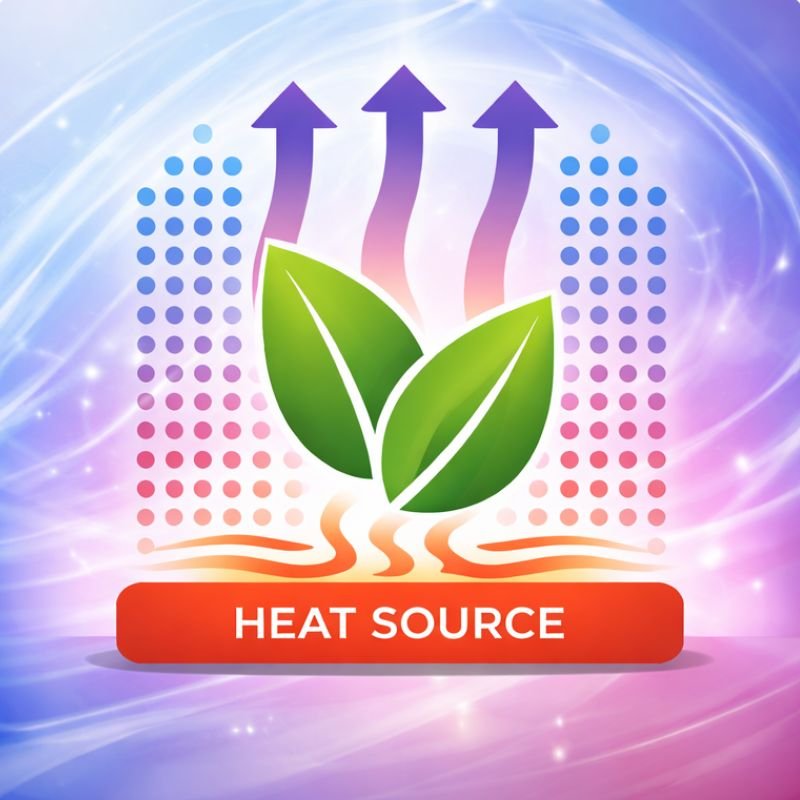
A dual heating system integrates two independent thermal sources—typically conduction and convection—to optimize heat distribution, ramp-up speed, and extraction efficiency within a single platform.
2x
Heat Sources
50%
Faster Heat-Up
Balanced
What It Solves
Single heating architectures often require compromise. Dual heating eliminates the trade-offs.
Single Heating Limitations
Pure Conduction
May heat quickly but risks localized overheating and hot spots formation.
Pure Convection
Offers cleaner flavor but may require longer stabilization time.
Dual Heating Solution
Balanced Performance
Delivers faster initial activation while maintaining controlled airflow-based vaporization during the session.
OEM Benefits Include:
Fewer complaints about uneven extraction Consistent first draw performance Temperature stability during longer sessions
How It Works
Understanding the science behind convection heating technology
Primary Heater Initiation
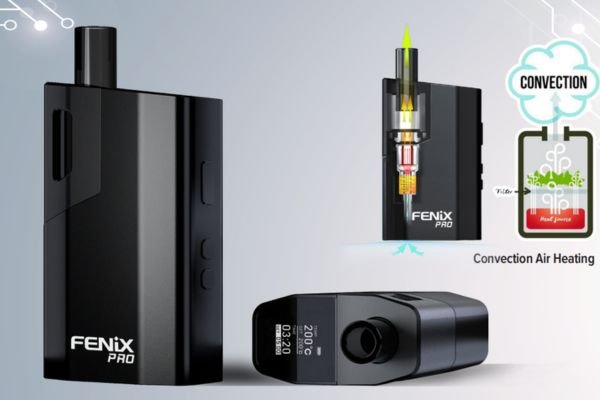
The primary heater (typically chamber-contact or base conduction) initiates rapid heat transfer to reduce warm-up time.
Secondary Airflow Activation
A secondary airflow-based heating element then maintains vaporization consistency by circulating controlled hot air through the material.
Firmware Coordination
The system is governed by firmware algorithms that dynamically adjust power distribution between both heat sources during ramp-up and active inhalation.
Optimized Result
The result is faster readiness without sacrificing vapor purity or session stability.
Engineering Advantages
Performance benefits that enhance user satisfaction and market positioning
Faster Heat-Up
Dual-stage heating significantly reduces ramp time, improving user satisfaction in portable devices.
Stable Output
Firmware-managed heat balancing ensures repeatable performance in mass production units.
Even Extraction
Supplementary airflow reduces hotspot formation common in single conduction designs.
Flexible Positioning
Ideal for brands targeting mid-to-premium markets that require both performance and practicality.
OEM Customization Levers
Deeper engineering alignment with your brand positioning through advanced dual heating calibration
100%
24h
Controlled Testing
±1%
Production Tolerance
Locked
Before Mass Mfg
Quality Assurance: Session timing behavior and safety cutoffs are validated under controlled test environments to ensure production-level repeatability. Every parameter adjustment is documented and locked before mass manufacturing.
Advanced Customization Parameters
Dual heating architecture allows deeper engineering alignment with brand positioning through precise parameter tuning.
Heating Priority Calibration
Determines how aggressively the primary heater initiates ramp-up versus how early convection airflow activates.
Temperature Curve Logic
Can be tuned to emphasize flavor-forward profiles or denser vapor output based on target market preferences.
Power Distribution Mapping
Balance between heat sources can be adjusted for battery efficiency versus performance intensity.
Best-Fit Product Lines
Optimal applications where dual heating technology delivers maximum value
Dual heating systems are best suited for:
Portable Devices
Requiring fast activation and strong first-draw performance for on-the-go usage.
Mid-to-Premium Tiers
Balancing cost efficiency with performance credibility for competitive market positioning.
Quick-Start Markets
Where users demand quicker readiness without fully sacrificing flavor integrity.
Это был наш первый испаритель, открывший новую эру вейпинга сухих трав. Благодаря инновационному дизайну и удобству использования он обеспечил Часто задаваемые вопросы (ЧАВО) About OEM Dry Herb Vaporizer
Common questions from OEM partners and technical considerations
Convection vs. Conduction: What are the core differences?
Convection heats air first and uses airflow to vaporize material evenly, while conduction heats the material by direct contact with a hot surface—more prone to hot spots and uneven extraction.
Does convection provide better "taste consistency"?
Yes. Because the heat source doesn't directly contact the material, it reduces localized burning risk and makes it easier to achieve stable flavor output curves across production units.
Does convection consume more power?
Convection systems require higher power and more sophisticated control algorithms, but through proper battery capacity and power strategy design, stable battery performance can be achieved in portable devices.
How do you ensure mass production consistency?
Key factors include: structural component tolerance control, heating and sensor consistency calibration, and factory testing with aging processes. (This can be expanded on our QC page with internal linking).
Which market positioning is convection suitable for?
More suitable for premium and mature channels. Brands can more easily establish differentiated consumer perception with "air heating, no combustion traces, pure flavor" messaging.
How do you ensure airflow purity and avoid “plastic taste” issues?
Airflow contamination is one of the most common market complaints.
Our engineering approach includes:
Fully isolated vapor path
Separation from PCB and battery chamber
Removable airpath structure for cleaning
Strict material selection and QC inspection
This significantly reduces odor contamination and improves flavor consistency.
What is your typical production lead time?
Standard timeline:
Technical discussion: 3–7 days
Sample development: 7–14 days
Mass production: 20–28 days
Lead time may vary depending on order volume and customization level.
We prioritize schedule stability for long-term partners.
Do you offer NDA protection for new product discussions?
Yes.
We can sign a Non-Disclosure Agreement before sharing technical drawings, firmware details, or development discussions.
Protecting your brand concept is part of our manufacturing responsibility.
How do you control product consistency during mass production?
All projects are produced under our ISO-certified quality management system.
Quality control includes:
Incoming material inspection (IQC)
In-process quality control (IPQC)
100% functional testing before shipment
Final outgoing inspection (OQC)
Temperature accuracy, battery performance, and airflow integrity are tested before release.
Is dry herb vaporization still a viable long-term product category?
Yes.
Dry herb vaporizers remain strong in:
Herbal wellness markets
CBD-focused brands
Regions where botanical products are preferred
Market segments may evolve, but demand for controlled botanical vaporization continues globally.
The key difference lies in engineering quality and brand positioning.
Get a Quote & Sample
Looking to Balance Performance, Cost, and Market Positioning?
Dual heating systems offer the perfect middle ground between single heating simplicity and pure convection complexity.
- 50% Faster Heat-up
- Balanced Cost vs Performance
- 500+ OEM Projects