- Purity-Control Platform
Airpath Isolation Technology
Separated Airflow. Material Integrity.
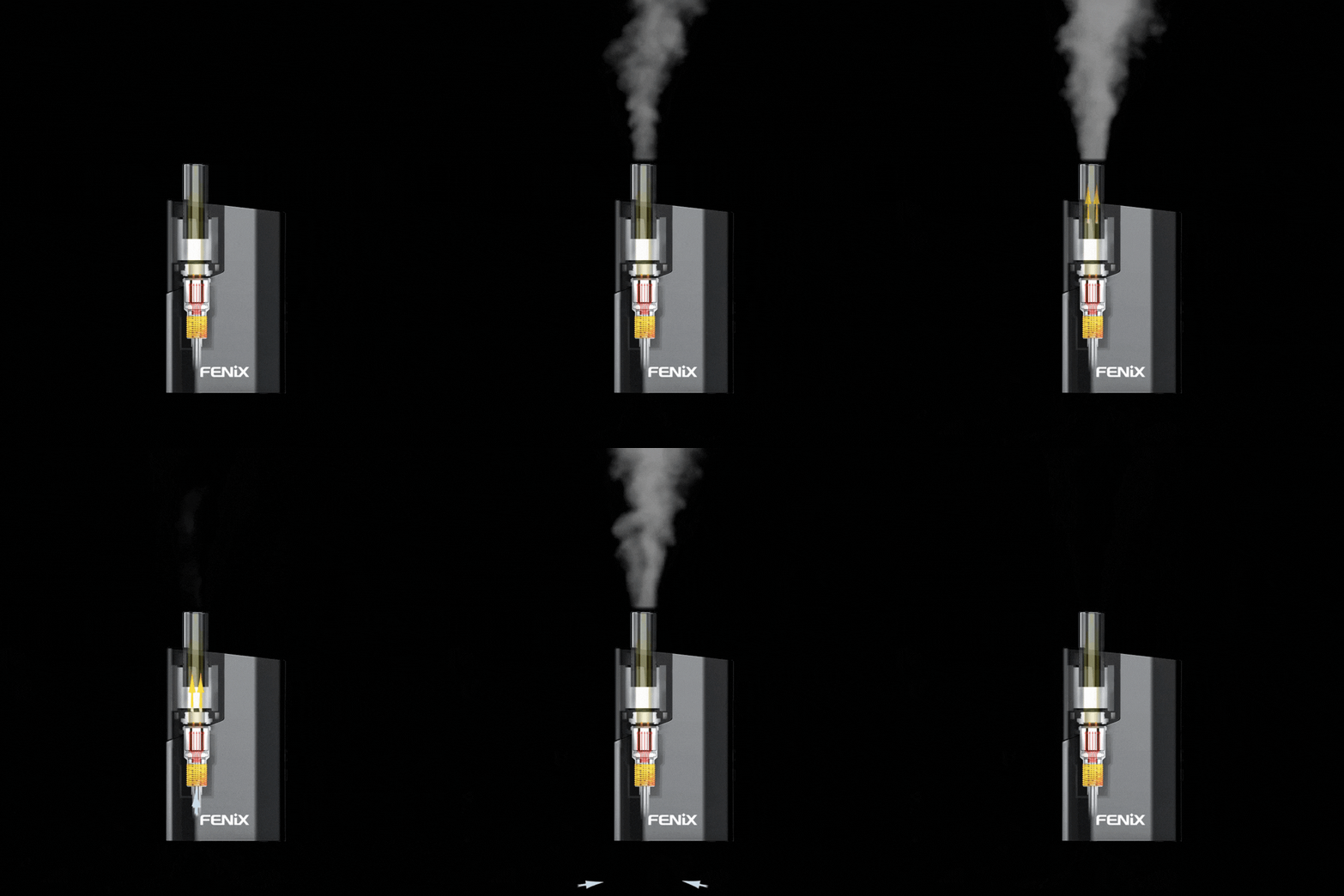
Airpath Isolation Technology ensures that inhaled air travels only through designated, inert, and heat-stable components—structurally isolated from electronics, adhesives, wiring, and battery assemblies.
SEALED
Vapor Path
NONE
Contamination
VERIFIED
What It Solves
Addressing critical issues in traditional heating methods for consistent, high-quality vaporization.
Traditional Combustion Limitations
- Direct burning creates uncontrolled heat spikes with no thermal ceiling—leading to inconsistent output and structural risk.
- Open flame combustion produces byproducts associated with ignition, making regulatory alignment more complex.
- Temperature variability across combustion products creates unpredictable end-user experience at scale.
HNB Engineering Response
- Operates within a defined temperature window—typically below combustion thresholds—maintaining controlled heating of tobacco substrates.
- Precision thermal regulation with PID-based control eliminates open flame and active ignition behavior.
- Firmware-enforced safety cutoffs maintain repeatable, predictable performance across entire production runs.
What This Enables for OEM Brands
- Predictable aerosol output across production batches.
- Reduced overheating risk through thermal limit enforcement
- Clear technology differentiation from flame-based systems
- Improved structural safety management for regulated markets
How It Works
Understanding the science behind convection heating technology
Heat Source Separation
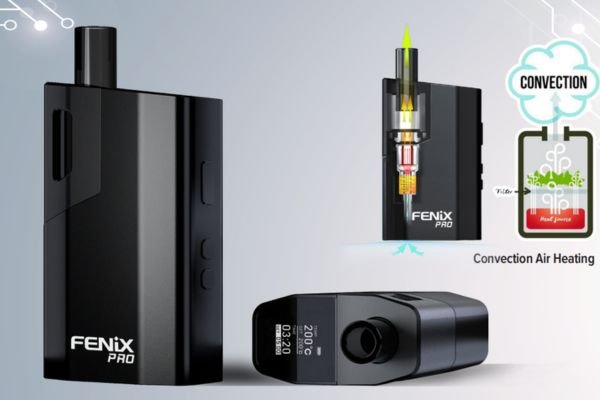
The heating element stays beneath the chamber, completely separated from the botanical material.
Air Heating Process
Incoming air is heated to the optimal temperature range before making contact with the material.
Controlled Airflow
Hot air travels through micro-perforations into the chamber for even distribution.
Even Vaporization
Hot air passes uniformly through the material to vaporize it without direct contact or burning.
Engineering Advantages
Technical benefits that matter for OEM partners and end-user satisfaction
Even Extraction
Hot air penetrates the load more uniformly, improving session consistency and reducing "top cooked / bottom raw" outcomes.
Controlled Temperature
A typical convection working range for botanicals sits around 160°C–220°C, helping brands deliver predictable experience.
Cleaner Taste Profile
With no direct-contact scorching, convection supports purer flavor output and helps avoid combustion traces.
Premium Positioning
Convection is commonly associated with higher-end performance expectations and used as differentiation for mature markets.
OEM Customization Levers
Flexible parameters to align convection performance with your market positioning
160°C-220°C
±2°C
精密なコントロール
<30s
Heat-up Time
99.5%
Production Consistency
Customizable Performance Parameters
For OEM programs, convection performance is not “one setting fits all”. We align the heating and airflow behavior with your market positioning by tuning key parameters.
- Heating response curve optimization
- Airflow management approach
- Target temperature behavior
- Mass production validation testing
Best-Fit Product Lines
Optimal applications for convection heating technology
Convection technology is best suited for:
Premium Dry Herb Platforms
Products that prioritize flavor purity and repeatable thermal efficiency for discerning users.
Technology-Differentiated Brands
Brands that need a clear technology story beyond generic ceramic conduction designs for competitive advantage.
Mature Market Positioning
Markets where consumers understand and value advanced heating technology differences.
ザ よくあるご質問 About OEM Dry Herb Vaporizer
Common questions from OEM partners and technical considerations
Convection vs. Conduction: What are the core differences?
Convection heats air first and uses airflow to vaporize material evenly, while conduction heats the material by direct contact with a hot surface—more prone to hot spots and uneven extraction.
Does convection provide better "taste consistency"?
Yes. Because the heat source doesn't directly contact the material, it reduces localized burning risk and makes it easier to achieve stable flavor output curves across production units.
Does convection consume more power?
Convection systems require higher power and more sophisticated control algorithms, but through proper battery capacity and power strategy design, stable battery performance can be achieved in portable devices.
How do you ensure mass production consistency?
Key factors include: structural component tolerance control, heating and sensor consistency calibration, and factory testing with aging processes. (This can be expanded on our QC page with internal linking).
Which market positioning is convection suitable for?
More suitable for premium and mature channels. Brands can more easily establish differentiated consumer perception with "air heating, no combustion traces, pure flavor" messaging.
How do you ensure airflow purity and avoid “plastic taste” issues?
Airflow contamination is one of the most common market complaints.
Our engineering approach includes:
Fully isolated vapor path
Separation from PCB and battery chamber
Removable airpath structure for cleaning
Strict material selection and QC inspection
This significantly reduces odor contamination and improves flavor consistency.
What is your typical production lead time?
Standard timeline:
Technical discussion: 3–7 days
Sample development: 7–14 days
Mass production: 20–28 days
Lead time may vary depending on order volume and customization level.
We prioritize schedule stability for long-term partners.
Do you offer NDA protection for new product discussions?
Yes.
We can sign a Non-Disclosure Agreement before sharing technical drawings, firmware details, or development discussions.
Protecting your brand concept is part of our manufacturing responsibility.
How do you control product consistency during mass production?
All projects are produced under our ISO-certified quality management system.
Quality control includes:
Incoming material inspection (IQC)
In-process quality control (IPQC)
100% functional testing before shipment
Final outgoing inspection (OQC)
Temperature accuracy, battery performance, and airflow integrity are tested before release.
Is dry herb vaporization still a viable long-term product category?
Yes.
Dry herb vaporizers remain strong in:
Herbal wellness markets
CBD-focused brands
Regions where botanical products are preferred
Market segments may evolve, but demand for controlled botanical vaporization continues globally.
The key difference lies in engineering quality and brand positioning.
Get a Quote & Sample
Ready for the Full Convection Specification Package?
Want the complete convection spec pack and recommended performance profiles tailored for your target market?
- Response in 12h
- NDA Available
- 500+ OEM Projects