- Controlled Tobacco Heating
Heat-Not-Burn Technology
Controlled Tobacco Heating. Zero Flame.
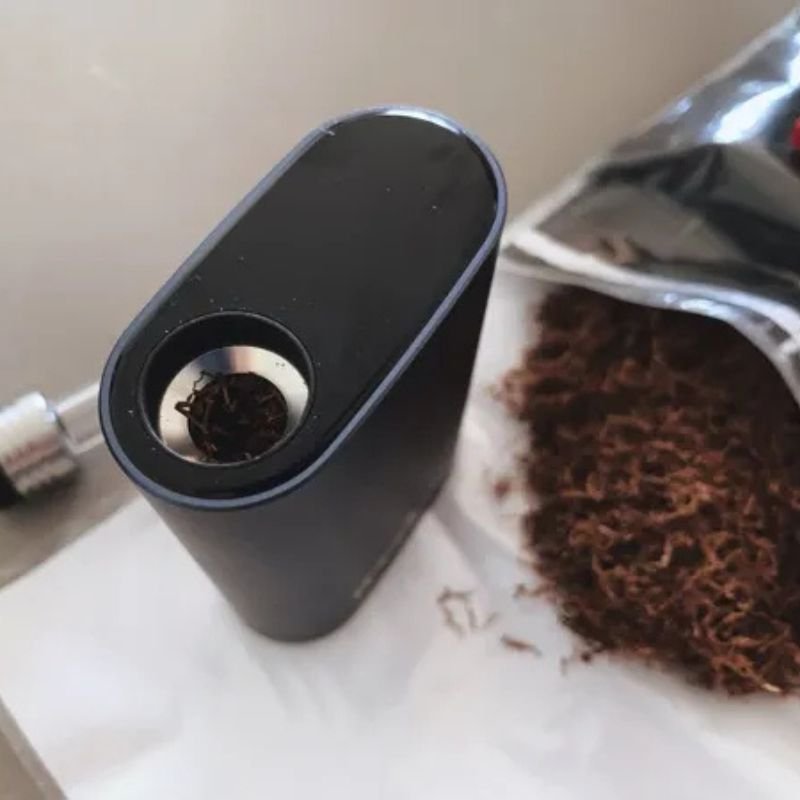
Heat-Not-Burn (HNB) technology heats processed tobacco or botanical sticks to controlled temperatures below combustion—producing aerosol without open flame or burning.
240°C
Operating Temperature
Heat Not Burn
Heating Mode
CONTROLLED
What It Solves
Addressing critical issues in traditional heating methods for consistent, high-quality vaporization.
Generic Vaporizer Design Risks
- Airflow may partially interact with PCB areas, adhesive joints, or battery housing—creating contamination pathways within the vapor channel.
- Thermal expansion over repeated heat cycles can compromise structural alignment, creating unintended airflow cross-contamination zones.
- Residue accumulation and material degradation affect vapor taste perception and output consistency across the product lifespan.
Airpath Isolation Response
- A fully separated vapor channel—constructed from inert, heat-stable materials—is mechanically isolated from all electronic and adhesive compartments.
- Thermal expansion behavior is factored into structural design—ensuring long-term alignment and isolation integrity through repeated heating cycles.
- Gaskets and seals at critical junctions prevent cross-channel leakage—maintaining vapor consistency throughout the product lifespan.
What This Enables for OEM Brands
- Cleaner flavor perception through material-separated vapor paths
- Reduced contamination risk from electronics and adhesive zones
- Lower long-term warranty claims through structural integrity maintenance.
- Stronger credibility positioning in premium and mature regulated markets.
How It Works
An HNB device uses a precision-controlled heating element—typically blade, pin, or chamber-contact architecture—to heat processed tobacco units from within or around the core.
The system maintains a defined temperature range below ignition level, avoiding open flame and active combustion through continuous thermal monitoring and firmware-regulated power delivery.
Dedicated Sealed Chamber Construction
An enclosed airflow chamber is engineered from heat-stable, inert materials—physically separate from the device's electronic architecture from the structural design stage.
Material Selection for Vapor Contact
Internal vapor-contact surfaces use medical-grade ceramics, stainless steel, or glass—materials selected for minimal off-gassing risk and high-temperature resistance under repeated thermal cycles.
Gasket & Seal Placement
Precision gaskets are placed at all critical junction points—preventing cross-channel air leakage between the vapor path and adjacent electronic or adhesive zones.
Thermal Expansion Engineering
Structural design accounts for differential thermal expansion across materials—ensuring long-term alignment and isolation integrity through thousands of repeated heating cycles.
Structural Engineering Advantages
Each advantage addresses a specific failure mode found in non-isolated airpath designs—validated under airflow resistance testing, thermal cycling simulation, and pressure stability verification.
Structural Compartmentalization
Clear physical separation between the vapor channel and all electronics—preventing contamination at the architectural level, not addressed post-production.
Material Stability Under Heat Cycles
Components selected for high-temperature resistance and minimal off-gassing risk—maintaining material integrity across the expected product lifespan and thermal cycle count.
Reduced Flavor Contamination
Minimized interaction between vapor and non-inert internal parts—preserving consistent flavor perception across sessions and between production units.
Improved Long-Term Consistency
Airpath integrity maintained through repeated heating cycles—reducing performance drift that typically emerges from gradual material degradation in non-isolated designs.
Quality Control Transparency
Isolated airpath design simplifies inspection and validation during production—leak detection and airflow resistance testing can be performed as discrete, targeted procedures.
Compatible Across All Heating Types
Airpath isolation is platform-agnostic—fully compatible with conduction, convection, hybrid, dual, and HNB heating architectures without modification to core heating logic.
OEM Customization
Airpath systems can be customized at multiple structural levels—from chamber material selection through to surface treatment of vapor-contact parts for brand-specific premium positioning.
Best-Fit Product Lines
Airpath isolation is especially valuable in markets where user perception of purity, flavor consistency, and engineering credibility drives purchase decisions and repeat retention.
Premium Dry Herb Vaporizers
Devices where flavor clarity and purity perception are the primary purchase drivers—isolation architecture provides a structural foundation for premium market claims..
Heat-Not-Burn Platforms
HNB products targeting regulated markets where structural separation between vapor and electronics supports engineering documentation for regulatory submission.
Concentrate Devices
Products where purity perception strongly influences user feedback and retention—isolation reduces the risk of flavor contamination that erodes brand credibility over time.
Credibility-Driven Brand Programs
Brands positioning around engineering substance rather than marketing claims—airpath isolation provides a verifiable, documentable technical differentiator.
Common Questions
Structured for OEM procurement teams, engineering leads, and regulatory evaluation contacts evaluating airpath isolation for production platforms.
What does "isolated airpath" actually mean?
It means inhaled air does not pass through electronic compartments or adhesive-joined structural areas. The vapor channel is a physically separate, sealed pathway—constructed from inert materials and mechanically isolated from all other internal components.
Does this improve flavor?
It reduces the risk of external material interaction with the vapor path—helping maintain consistent vapor perception across sessions. The isolation architecture removes a contamination source rather than adding a flavor-enhancement feature.
Is full airpath isolation necessary for entry-level devices?
Not always. In regulated or premium market contexts, isolation significantly enhances brand credibility and reduces long-term warranty risk. For volume entry-level categories, a simplified isolation approach may be more cost-appropriate—discussed during OEM scoping.
Does isolation increase production complexity?
Yes—it requires more precise structural alignment and sealing validation during manufacturing. This is offset by reduced post-production warranty exposure and more straightforward quality inspection of the isolated channel as a discrete assembly.
How do you test airpath integrity?
Through airflow resistance measurement (draw resistance testing), leak detection tests (pressure differential), and thermal cycle validation (structural alignment verification after repeated heat-cool cycles at rated temperature extremes).
Is cleaning affected by isolation design?
Isolation can be designed as modular (user-removable for cleaning access) or fixed-integrated (prioritizing structural leak integrity). The approach is selected based on brand cleaning strategy and target user behavior during OEM customization.
Can this be applied to all heating technologies?
Yes. Airpath isolation is compatible with conduction, convection, hybrid, dual, and HNB platforms. The isolation architecture operates at the structural level—independent of the heating mechanism—making it a cross-platform engineering capability.
Get a Quote & Sample
Airflow Purity Defines User Perception.
More than most visible product features, the integrity of the vapor path determines long-term user satisfaction and brand credibility. Share your platform requirements—we’ll respond with the full airpath structural specification pack.
- Response in 12h
- NDA Available
- 500+ OEM Projects